


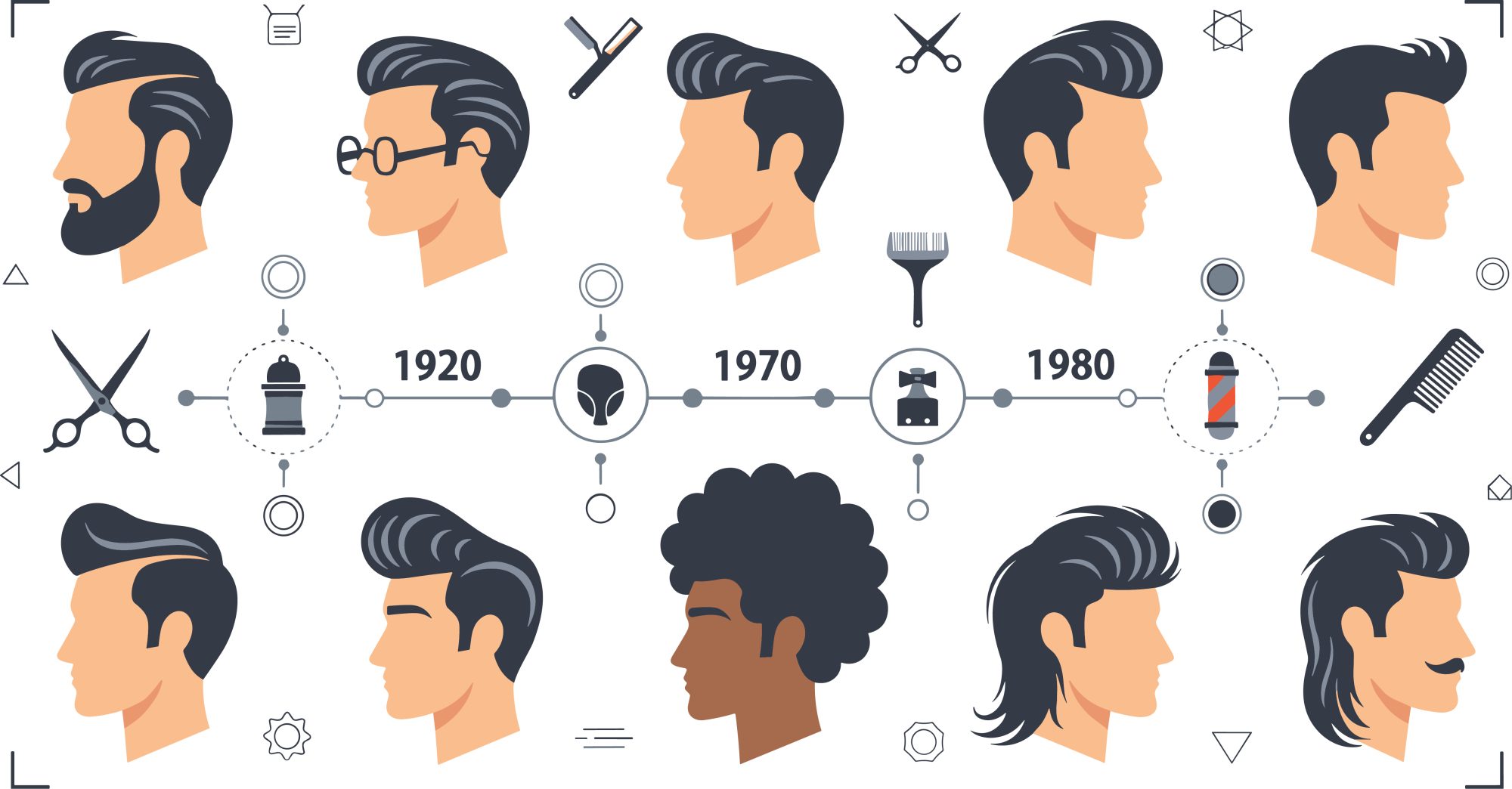
 Men’s hairstyles have always said something about the era, the culture, and who men wanted to be. From the slicked-back sophistication of the 1920s to the textured, skin-faded cuts dominating barbershop chairs today, hair has been one of the most telling reflections of where society stood at any given moment. Sometimes, knowing the style of the past can help you determine the best fit for your future. In this blog, we’ll walk you through:
- How trends shifted over time
- Which cultural forces are behind men’s hair
- Why certain styles took off
- What modern looks borrow from the past
Here at Honeycuts, we’ve been proudly cutting men’s hair since 2003. Our team is happy to discuss the latest hairstyles and help you determine the options that will keep you confident and happy.
How Did Men’s Hairstyles Change Decade by Decade?
Throughout history, we have seen many different hairstyles. From the polished, controlled looks of the early 20th century to the bold and expressive styles that followed, each decade brought something new to the world. Key decade-by-decade shifts include:
- 1920s–1930s: Slicked-down, side-parted, and neat
- 1940s: Military-influenced cuts, clean and cropped
- 1950s: Pompadours and ducktails
- 1960s–1970s: Longer lengths, afros, and counterculture influence
- 1980s: Voluminous, bold, and often excessive
- 1990s: Grunge cuts, curtained hair, and the buzz cut revival
- 2000s–2010s: Faux hawks, undercuts, and the rise of the fade
Looking at this timeline, it’s clear that men’s hair has always been about more than just looks. Each style tells a story about the times, and understanding that history can help you make a more informed choice about your own look today.
What Cultural Forces Actually Shaped Men’s Hair Trends?
Throughout history, major cultural shifts, music movements, and political moments have directly influenced how men choose to style their hair. We can see how these moments helped shape the grooming choices we have today by looking at history. A few key cultural forces that redefined men’s hair include:
- The 1960s Music Revolution: When the Beatles arrived in America, their signature mop-top cuts quickly became a must-have look for teenage boys across the country.
- The 1970s Political Statement: During the Vietnam War era, growing your hair long and loose became a symbol of peace and a rejection of rigid authority. This was embraced by rock stars and everyday men alike.
- The 1980s and ’90s Hip-Hop Movement: Hip-hop culture brought high-top fades and precise geometric line work to the mainstream. This movement transformed local barbershops into creative spaces and celebrated hair as a true art form rooted in African American culture.
Ultimately, your hair is one of the most personal ways to tell your story. Understanding where these iconic styles came from can help you find a look that feels authentic, comfortable, and right for you today.
Why Do Certain Men’s Hairstyles Become Popular When They Do?
Many people wonder why certain hairstyles seem to take over suddenly. It’s rarely a coincidence. A style tends to gain traction when a few key factors come together at just the right moment. Here are a few reasons why men’s hairstyles often become popular:
- A cultural figure makes it visible. A musician, athlete, or actor sports the look, and suddenly everyone wants it.
- The right product exists to achieve it. Pomades, gels, and waxes have all played a huge role in making certain styles accessible and achievable at home.
- It speaks to what men want to communicate about themselves. Style is personal, and the looks that stick around are the ones that help men express something meaningful about who they are.
When the timing is right, a hairstyle can feel less like a trend and more like a natural fit. A trusted men’s stylist can help you determine when this moment is so that you can make your choice with pride.
What Do Modern Men’s Hairstyles Borrow From the Past?
Many of today’s most popular men’s hairstyles have been seen before While the names and finishing touches may have changed, the core ideas are still present. Some favorites that are still seen today include:
- Skin fade: Rooted in 1980s and 1990s barbershop culture
- Textured crop: Evolved from the 1960s French crop
- Modern pompadour: Built on the 1950s silhouette with contemporary updates
- Slick back: A direct descendant of 1930s and 1940s elegance
- Curtain hair: A revival of the mid-1990s look, popularized again in recent years
Understanding this history can actually make it easier to choose a style that feels right for you. When you know where a look comes from, you get a better sense of what it communicates and whether it suits your personality. A skilled stylist can help you connect the dots between the past and what works best for you today.
Your Next Great Haircut Is Waiting
Understanding where men’s hairstyles come from makes it a lot easier to figure out where you want to go with your own look. History gives you options, and a good stylist helps you make the most of them.
At HoneyCuts, the stylists know men’s hair inside and out. Whether you’re drawn to a classic pompadour, a sharp skin fade, or something entirely your own, HoneyCuts offers a comfortable, no-fuss environment built specifically for men. Book your appointment today and walk out looking sharp.